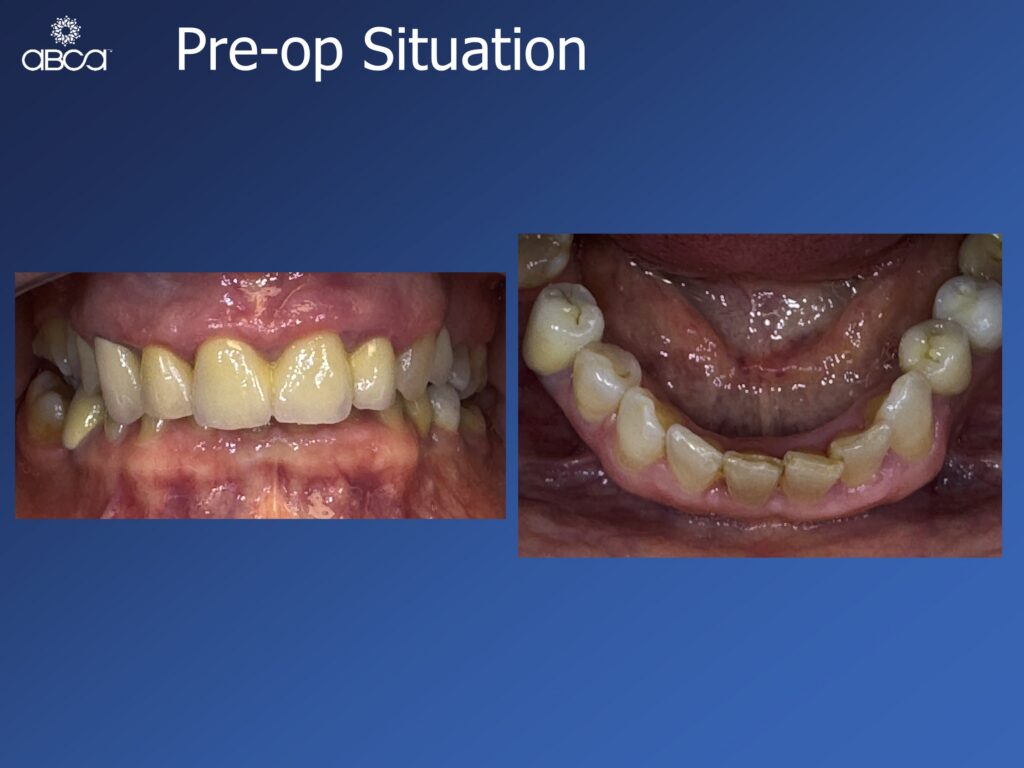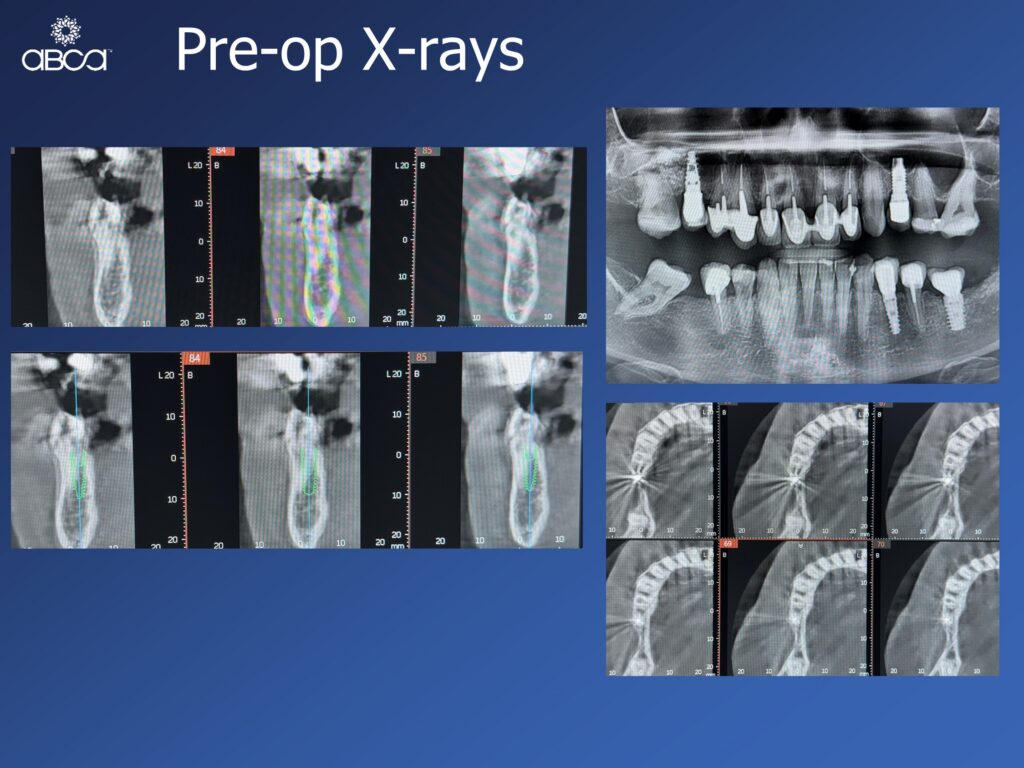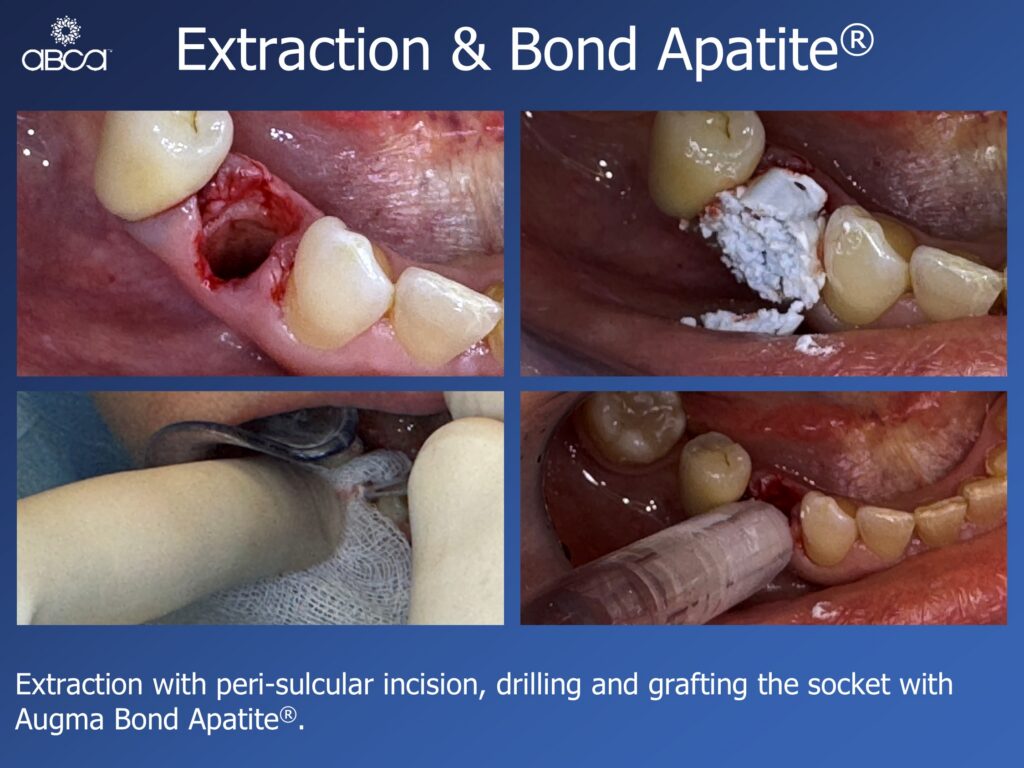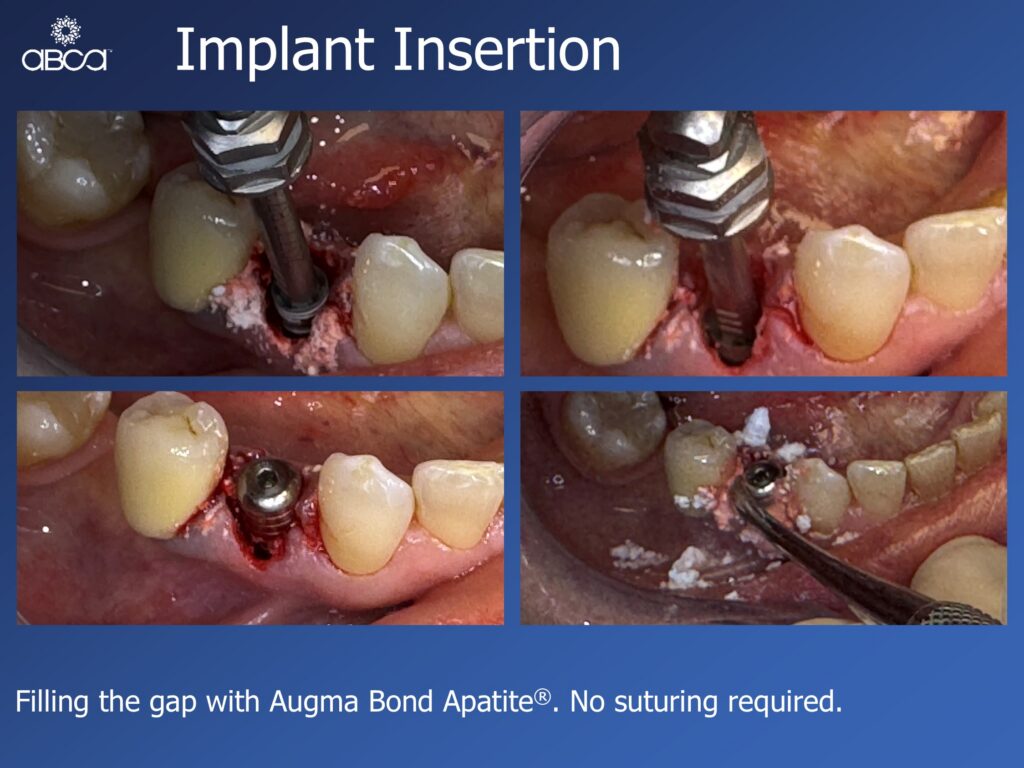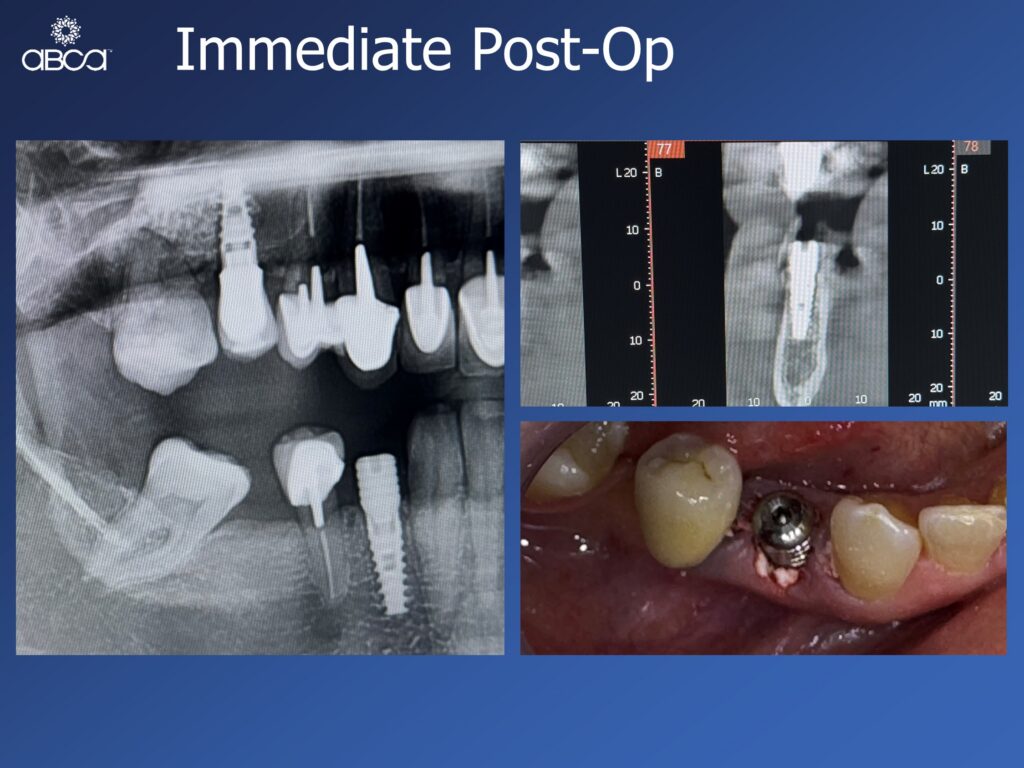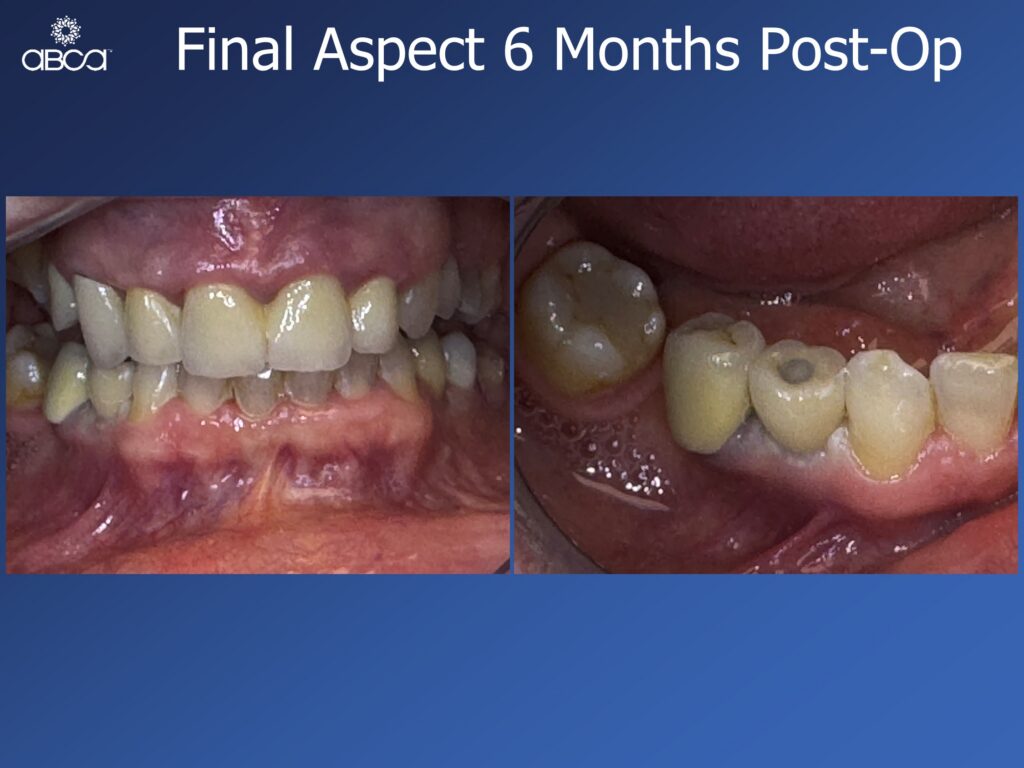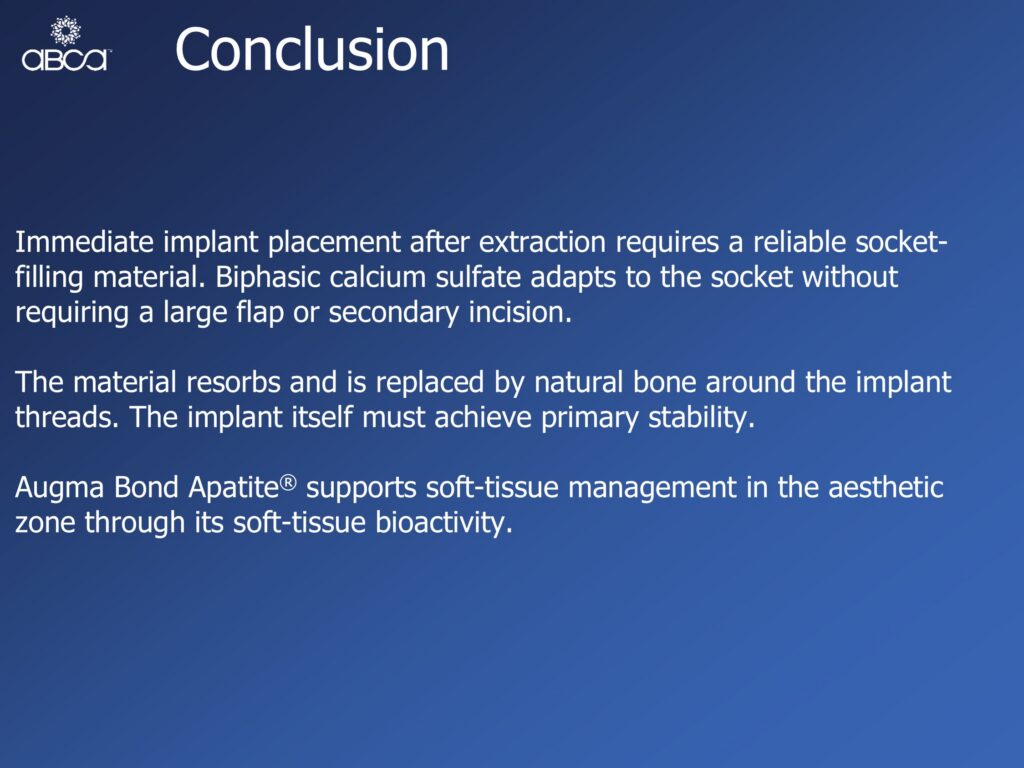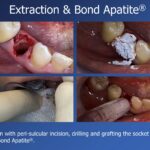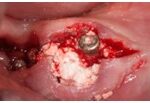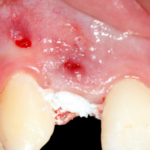
The patient is a 63-year-old nonsmoking woman. During a routine recall examination, her referring dentist diagnosed internal resorption in tooth #28 (44). She reported no symptoms. We therefore planned to extract the tooth and place an implant immediately.
Discussion and Proposal:
The natural root’s anatomy and trajectory differ fundamentally from those of the implant. Tooth extraction therefore leaves a residual defect that requires grafting. The grafting material must flow well enough to adapt closely to the defect. We prefer to avoid barrier membranes for graft stabilization because they can increase postoperative edema and irritate the soft tissues.
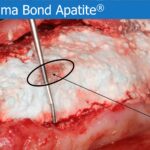
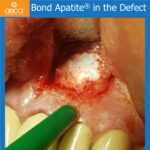
In this procedure, we will use biphasic calcium sulfate (Augma Bond Apatite®), which hardens under pressure. The surrounding native bone will provide primary implant stability; the grafting material itself will not. The material can tolerate 2–3 mm of exposure and does not require coverage with a barrier membrane.