The patient is a 66 year old, healthy, non-smoking female. Edentulous atrophic maxilla, in the lower jaw, atrophied bone on the right and lost tooth #44 (28) with a fractured root. A lost abutment on the left side, tooth #37 (18) with atrophied bone on the left side as well. Our goal is to maintain all the rest of the remaining teeth.
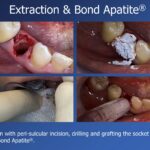
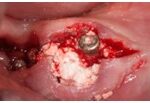
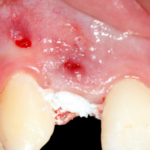
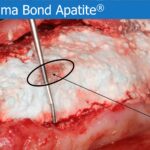
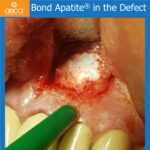
CLINICAL CASE Complex Rehabilitation Dr. Omri Rudberg DMD, IsraelCase Description – The patient is a 66 year old, healthy, non-smoking female. Edentulous atrophic maxilla, in the lower jaw, atrophied bone on the right and lost tooth #44 (28) with a fractured root. A lost abutment on the left side, tooth #37 (18) with atrophied bone on the left side as well. Our goal is to maintain all the rest of the remaining teeth.Augma in Place – We start with the upper jaw with an immediate loading procedure. To achieve sufficient bone volume around the implants we utilized 8 tilted implants and Augma Bond Apatite®. The ridge that we are dealing with is severely thin.Implants in Place – At the same time, extractions of #44 (28) and #37 (18 ) using Bond Apatite® for socket preservation and augmenting the distal ridges.Clinical Results – Clinical situation of immediate loading.Initial Situation: Lower JawInitial Situation: Lower Jaw4 Months Post-Op – We were able to gain bone volume at the socket areas, the ridge is wider on both sides However, on the right side we don’t have more than 4 mm above the mandibular nerve. On the left side there is enough bone volume for a short implant.4 Months post-opSolution for Right Side – Solution for the right side. A custom designed subperiosteal implant. We plan screw positioning in relation to the mandibular canal.Implant On the ModelLeft Side Sub Periosteal – Sub periosteal implant on the mandible after decortication.Bond Apatite® in PlaceLeft Side Implants – The left side sub periosteal and additional augmentation. Short implants (Bitcon) were used during the operation.3 Year Follow-Up3 Year Follow UpRight Side: 3 Years Post-OpLeft Side: 3 Years Post-Op – All of the natural teeth, including the mobile anterior abutment of the bridge, have been saved.