The patient is a 40 year old, non-smoking female. She wanted a fast and aesthetic solution for tooth #14 (5). The treatment plan is a single surgery with an immediate implant and closed sinus lift to replace teeth #14 (5) and #16 (3).
The patient is deeply concerned by the aesthetic problem on tooth #14 (5). She is asking for an efficient, provisory solution. Nevertheless, if the loss of tooth #16 (3) is not promptly solved, it may cause the loss of tooth #15 (4). The proposal is to replace both the premolar and molar in one, single surgery.
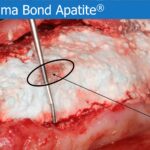
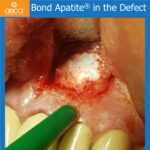
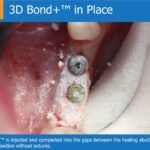
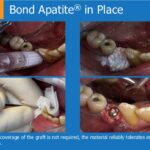
CLINICAL CASE: 1 Product, 2 Solutions A New Perspective Dr Stéphane Berg, DDS FranceCase Report: The patient is a 40 year old, non-smoking female. She wanted a fast and aesthetic solution for tooth #14 (5). The treatment plan is a single surgery with an immediate implant and closed sinus life to replace teeth #14 (5) and #16 (3).Discussion: The patient is deeply concerned by the aesthetic problem on tooth #14 (5). She is asking for an efficient, provisory solution. Nevertheless, if the loss of tooth #16 (3) is not promptly solved, it may cause the loss of tooth #15 (4). The proposal is to replace both the premolar and molar in one, single surgery.Proposal: #14 (5): Extraction with immediate implant placement, grafting and immediate loading. #16 (3): Implant placement with a closed sinus lift (Summers technique) with grafting. It is decided to use Augma Bond Apatite® with 2 different protocols.Operating Mode: #14 (5) : Biphasic Calcium Sulfate cement must be grafted after the activation of the syringe, directly in the socket then pressed firmly according to the protocol. #16 (3) : The graft cement must be inserted into the sinus space through the socket, after activation and setting according to the protocols. The same material will be employed in two totally different ways to optimize results.CBCT: Extraction, implant placement, grafting & immediate loading. Closed sinus lift using Summers technique & grafting.Surgery – #14 (5)Surgery – #14 (5)Preparing Bond Apatite®: Activate the Bond Apatite® syringe and set aside to harden for 2 minutes.Closed Sinus Lift – #16 (3)Closed Sinus Lift – #16 (3)Closed Sinus Lift – #16 (3)Immediate Load – #14 (5)Post-Op CBCTPost-Op CBCT7 Months Post-OpFinal Results: Biphasic calcium sulfate allows simple socket grafting during immediate implant placement and will be an efficient product to back the Summers protocol with grafting. The protocols are not the same but can be considered and applied together in one single surgery if needed. The mastery of two different protocols, and the use of a multipurpose material, leads to satisfactory results and time saved.
Hi, when placing an immediate implant is it recommended to place bone cement in the whole osteotomy , wait for it to set and then make the final osteotomy and insert the implant?
I saw some in Augmaflix cases done that way.
This case looks like the bone cement is only placed AFTER the implant inserted.
Immediate implant placement is always a new challenge.
The time of the grafting depends on the following:
– The volume needed to complete the process.
– The type of bone loss.
When the implant is large enough, and the bone loss is reduced, then I graft before placing the implant. I drill without water, very low speed, reverse clockwise rotation in order to condense the material.
When the bone loss is larger, I perform implant placement before grafting so that I will have the opportunity to press the material directly.
In both cases, I add some graft on top of the implant.



2 Comments
Hi, when placing an immediate implant is it recommended to place bone cement in the whole osteotomy , wait for it to set and then make the final osteotomy and insert the implant?
I saw some in Augmaflix cases done that way.
This case looks like the bone cement is only placed AFTER the implant inserted.
The following is a reply from Dr Stéphane Berg:
Immediate implant placement is always a new challenge.
The time of the grafting depends on the following:
– The volume needed to complete the process.
– The type of bone loss.
When the implant is large enough, and the bone loss is reduced, then I graft before placing the implant. I drill without water, very low speed, reverse clockwise rotation in order to condense the material.
When the bone loss is larger, I perform implant placement before grafting so that I will have the opportunity to press the material directly.
In both cases, I add some graft on top of the implant.